The Iglu Guide | Blog
Student’s guide to recycling in Australia
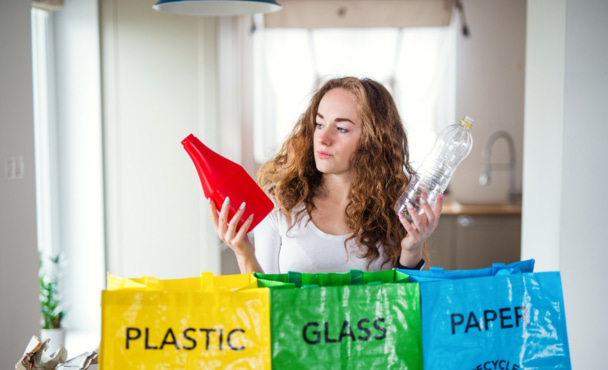
Settling into a new country is about more than just picking up the language and working out how to get to uni. For students new to Australia, everything can feel a bit different, whether that’s about catching a bus, paying for goods, or even working out which bin to use. Whether you’re living in Sydney, Melbourne or Brisbane, understanding the dos and don’ts of waste disposal is just one easy way you can do your bit for the planet. Here’s what you need to know.
Recycling in Australia: know the basics
Australia has a colour-coded bin system that in general follows the same rules across most states. However, the exact rules can vary by city and state, so always check your local guidance and any instructions provided by your accommodation.
- Red bin – General waste
- Blue bin – Paper (unless mixed recycling, use yellow bin)
- Yellow bin – Plastics/glass (unless mixed recycling and includes paper)
- Green bin – Garden waste and/or food waste (area-dependent)
One of the most common mistakes is to place items in the incorrect bins. Be wary of soft plastics, disposable coffee cups and food scraps as these generally don’t belong in the standard colour-coded bins, and can sometimes contaminate the entire collection.
Sydney recycling – New South Wales
For students studying in Sydney, the rules generally follow the Australian basics although there are some slight differences.
- Yellow bins are used for plastics/glass and sometimes mixed recycling
- Some buildings offer blue bins for paper/cardboard
Soft plastics: These should be collected separately and taken to a dedicated soft plastic collection point. If there is no suitable collection point, they must go in general waste.
Electrical items: Thisincludes old phones, laptops, chargers and small appliances. Items must be taken to an allocated e-waste facility rather than be placed in household bins.
Top tip: Take advantage of the New South Wales Return and Earn scheme and receive 10c back for all eligible drink containers.
Check: Students living in Sydney accommodation should always check the building’s recycling arrangements and local council guidelines.
Melbourne recycling – Victoria
Melbourne students may see some recycling guidance variation between different councils and buildings as Victoria is in the process of separating out some collections.
- Yellow bins are generally used for mixed recycling
- Purple bins may be used for additional collections such as glass bottles/jars
- Green bins may be used for both food scraps and garden waste
Soft plastics: These should be collected and disposed of at participating soft plastic collection point, or by following your local council’s advice.
Electrical items: E-waste has been banned from landfill in Victoria since 2019. Not only does this prevent hazardous substances from contaminating soil and water, it allows valuable resources to be reused and reduces landfill. All electronic items must be taken to an appropriate e-waste recycling point rather than placed in household bins which can result in a penalty.
Top tip: Take advantage of Victoria’s Container Deposit Scheme which gives a 10c refund for every eligible drink container returned to a designated collection point.
Check: Students living in Melbourne accommodation should always check the building’s recycling facilities alongside local council guidelines.
Brisbane recycling – Queensland
Brisbane generally follows the basic rules, with the key difference relating to the green bin collection. Brisbane City Council previously trialled food waste recycling, but once paused it was never resumed. Students are encouraged to compost food scraps, or dispose of them in the general waste.
- Yellow bins are generally used for mixed recycling (including paper/cardboard)
- Green bins are generally only for garden waste collection (not food scraps)
Soft plastics: Plastic bags, snack wrappers, bubble wrap should all be collected and disposed of at a participating soft plastic collection point, or placed in general waste.
Electrical items: These should never be placed in household bins. Instead, Brisbane City Council provides dedicated e-waste recycling facilities at one of four Resource Recovery Centres where many items can be recycled free of charge.
Top tip: Take advantage of Queensland’s Containers for Change scheme which gives a 10c refund for every eligible drink container. You can return them to a designated refund point – or even arrange a home collection!
Check: Students living in Brisbane student accommodation should always check the building’s recycling facilities alongside local council guidelines.
Students living in purpose-built student accommodation should always check what recycling facilities are available in the building. Waste disposal can vary between properties, so look for instructions near the bins, or ask your onsite team to help you find the designated waste areas and understand more about the arrangements specific to your property.
Frequently asked questions
Most of Australia uses a colour-coded bin system. Red bins are for general waste, yellow bins are for recycling such as plastic bottles, glass and cans, blue bins are for paper and cardboard where provided, and green bins are for garden waste and sometimes food scraps. Rules can vary by city, council and building, so always check the local guidance and any instructions at your accommodation.
No, soft plastics such as plastic bags, snack wrappers and bubble wrap generally don’t belong in the yellow recycling bin. They can jam sorting machinery and contaminate the whole collection. Take them to a participating soft plastic collection point instead, or place them in general waste if there’s no suitable option nearby.
Most disposable coffee cups can’t go in household recycling bins. They usually have a plastic lining that makes them difficult to recycle, so they generally belong in general waste. Bringing a reusable cup is an easy way to avoid the problem altogether.
Putting the wrong items in a recycling bin can contaminate the entire collection, which may mean everything ends up in landfill. Common culprits include soft plastics, coffee cups and food scraps. Taking a moment to check before you throw something away makes a real difference.
Start by finding out what recycling facilities are available in your building, as arrangements can vary between properties. Look for signage near the bins, or ask your onsite team to show you the designated waste areas and explain how recycling works at your property.